-
By admin
-
March 19, 2026
- 0 Comment
Rapid Prototyping and Mass Production of Aluminum Heat Sink Housings for Power Electronics
Introduction: Meeting Thermal Challenges in Modern Power Electronics
As power electronics continue to evolve toward higher power density and compact design, effective thermal management has become a critical factor in system reliability and performance. Components such as inverters, converters, and power modules generate significant heat, making aluminum heat sink housings essential for efficient heat dissipation.
To stay competitive, manufacturers need partners who can deliver both rapid prototyping and scalable mass production—without compromising precision or quality.
Why Aluminum Heat Sink Housings Matter
Aluminum is the material of choice for heat sink housings due to its:
-
Excellent thermal conductivity
-
Lightweight structure
-
Corrosion resistance
-
Cost-effectiveness for large-scale production
However, achieving optimal thermal performance requires more than just material selection. It demands precision machining, optimized fin structures, and tight dimensional control.
From Concept to Prototype: Accelerating Development Cycles
In power electronics, speed to market is crucial. Our rapid prototyping capabilities help clients move quickly from design to validation:
-
Fast DFM (Design for Manufacturability) feedback
-
CNC-machined prototypes within days
-
Simulation-supported design optimization for airflow and heat dissipation
-
Iterative testing for structural and thermal performance
By streamlining the prototyping process, we help reduce development cycles and enable faster product launches.
Precision Machining for High-Performance Heat Dissipation
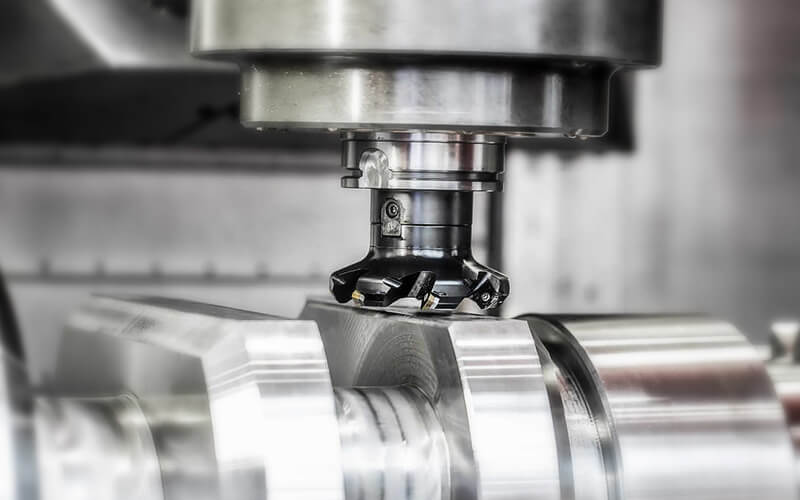
To ensure optimal thermal efficiency, we apply advanced machining techniques:
🔧 CNC Milling for Complex Fin Structures
-
High-density fins for increased surface area
-
Uniform spacing for airflow optimization
⚙️ Tight Tolerance Control
-
Precision up to ±0.01 mm for critical interfaces
-
Flatness control for proper contact with heat-generating components
🧪 Surface Finishing
-
Anodizing for corrosion resistance
-
Sandblasting or polishing for improved thermal radiation
These processes ensure that each heat sink housing performs reliably under high thermal loads.
Seamless Transition to Mass Production
Beyond prototyping, we specialize in scalable manufacturing solutions:
-
Integration of die casting + CNC machining for cost efficiency
-
Automated production lines for consistent quality
-
Annual production capacity reaching hundreds of thousands to millions of units
-
Stable supply chain for global delivery
This seamless transition from prototype to production allows clients to scale confidently as demand grows.
Applications Across Power Electronics Industries
Our aluminum heat sink housings are widely used in:
| Industry | Application |
|---|---|
| Renewable Energy | Solar inverters, energy storage systems |
| Automotive | EV power modules, onboard chargers |
| Industrial Equipment | Power supplies, motor drives |
| Telecommunications | 5G base station power units |
Each application requires tailored thermal solutions, which we deliver through custom precision machining services.
Why Choose Us as Your Manufacturing Partner
-
✅ Expertise in thermal management component machining
-
✅ Strong capability in both prototyping and high-volume production
-
✅ Experience serving EU and US markets
-
✅ ISO 9001:2015 certified quality system
-
✅ Fast response and engineering support
We don’t just manufacture parts—we help optimize your thermal performance and product reliability.
Conclusion: Precision and Scalability for Thermal Solutions
From rapid prototyping to full-scale production, the ability to deliver high-precision aluminum heat sink housings is essential for modern power electronics.
By combining engineering expertise, advanced CNC machining, and scalable manufacturing, we empower our clients to achieve better thermal performance, faster development cycles, and reliable large-scale production.
“We can easily manage if we will only take, each day, the burden appointed to it. But the load will be too heavy for us if we carry yesterday’s burden over again today, and then add the burden of the morrow before we are required to bear it factorial non.”
Rebert Kosta