-
By admin
-
7 5 月, 2026
- 0 Comment
Hybrid Manufacturing: Combining CNC Machining and Casting for Cost-Effective Precision Parts
In the rapidly evolving landscape of precision manufacturing, companies are constantly seeking innovative approaches that balance quality, cost-efficiency, and production speed. Hybrid manufacturing—the strategic combination of CNC machining and metal casting—has emerged as a transformative solution for producing complex industrial components at scale. This integrated approach leverages the unique strengths of both processes, enabling manufacturers to achieve tighter tolerances, reduce material waste, and optimize production costs for applications ranging from power electronics enclosures to aerospace components.
Understanding Hybrid Manufacturing: CNC Machining Meets Metal Casting
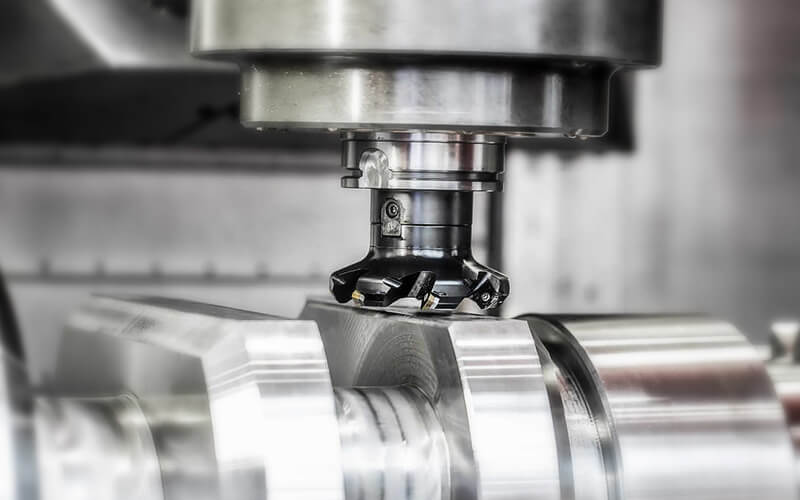
Hybrid manufacturing represents a paradigm shift in how industrial parts are conceived and produced. Rather than relying exclusively on a single manufacturing method, this approach strategically deploys CNC machining and metal casting in complementary roles throughout the production process. CNC machining excels at delivering exceptional precision, smooth surface finishes, and tight tolerances—typically within ±0.01mm—making it ideal for features that require exacting specifications. Metal casting, particularly high-pressure die casting and investment casting, efficiently shapes raw material into complex geometries with minimal waste, making it cost-effective for high-volume production runs.
The synergy between these two processes creates opportunities that neither method could achieve independently. Complex parts often feature areas requiring precise machined surfaces alongside sections with intricate internal geometries that cast beautifully but prove challenging or expensive to machine. By reserving CNC machining for critical functional surfaces while leveraging casting for bulk material shaping, manufacturers can dramatically reduce machining time, tool wear, and material consumption. This balanced approach has proven particularly effective for aluminum heat sink housings, power module enclosures, and other components where thermal management, structural integrity, and dimensional accuracy must all be optimized simultaneously.
Key Advantages of Combining CNC and Casting Processes
The business case for hybrid manufacturing rests on several compelling advantages that directly impact the bottom line. Cost Reduction stands as the most immediate benefit, as casting reduces the amount of raw material that must be removed through machining. For aluminum components, this can translate to material savings of 30-60% compared to parts machined entirely from solid billet, with corresponding reductions in machining time and tool costs. Production Speed improves significantly for high-volume orders, as casting dies can produce thousands of identical near-net-shape parts while CNC machines focus their capacity on precision-critical features rather than bulk material removal. Design Flexibility increases as engineers can specify optimal wall thicknesses, internal channels, and complex contours through casting while maintaining precise mounting surfaces, threaded holes, and sealing faces through CNC machining.
Beyond economics, hybrid manufacturing delivers Quality Improvements that directly benefit end users. Cast surfaces often provide better的基础 for thermal management features, while machined surfaces guarantee the precise fits required for bolted connections, electrical interfaces, and optical components. The reduced machining workload also minimizes heat-related distortion, as less material is removed in the finishing stage. For power electronics applications requiring consistent thermal performance—heat sinks, IGBT modules, and traction inverters—hybrid manufacturing ensures that critical thermal interfaces remain flat and unobstructed while structural features maintain their dimensional integrity over thousands of thermal cycles.
Applications in Power Electronics and Industrial Manufacturing
The power electronics industry has embraced hybrid manufacturing with particular enthusiasm, recognizing its ability to address the unique challenges of thermal management and electrical isolation simultaneously. Aluminum heat sink housings manufactured through hybrid processes feature die-cast or investment-cast fins and external contours that maximize surface area for heat dissipation while CNC-machined mounting surfaces and bolt patterns guarantee precise alignment with semiconductor modules, circuit boards, and cooling systems. The combination of casting’s design freedom and machining’s precision creates enclosures that perform reliably in demanding environments ranging from industrial motor drives to electric vehicle charging systems.
Industrial automation, telecommunications infrastructure, and medical device manufacturing similarly benefit from hybrid approaches. Complex housings requiring EMI shielding, thermal management, and precise connector interfaces can be produced more efficiently when casting creates the foundational shape and CNC machining delivers the exact features required for component integration. For companies developing new products, hybrid manufacturing enables rapid prototyping through 3D-printed investment casting patterns combined with CNC machining of prototype fixtures—accelerating time-to-market while maintaining production-quality part characteristics.
Implementing Hybrid Manufacturing for Your Production Needs
Successfully adopting hybrid manufacturing requires thoughtful planning and partnership with experienced fabrication specialists. The process typically begins with design for manufacturability (DFM) analysis, where engineering teams evaluate part geometry to identify optimal boundaries between cast and machined features. Critical considerations include draft angles for casting, location of parting lines, identification of features requiring precision machining, and assessment of material properties required for each section of the component.
Working with a manufacturer experienced in both CNC machining and metal casting ensures seamless transition between processes, consistent quality control throughout production, and expert guidance on design optimization. At our facility, we combine advanced 5-axis CNC machining centers with high-pressure die casting and precision investment casting capabilities, enabling single-source production of complex assemblies. Our engineering team collaborates with customers from initial concept through production, optimizing part designs to maximize the benefits of hybrid manufacturing while maintaining all functional requirements.
“We can easily manage if we will only take, each day, the burden appointed to it. But the load will be too heavy for us if we carry yesterday’s burden over again today, and then add the burden of the morrow before we are required to bear it factorial non.”
Rebert Kosta