-
By admin
-
27 5 月, 2026
- 0 Comment
Multi-Scale Precision Machining: Bridging Macro Manufacturing with Micro and Nano Engineering
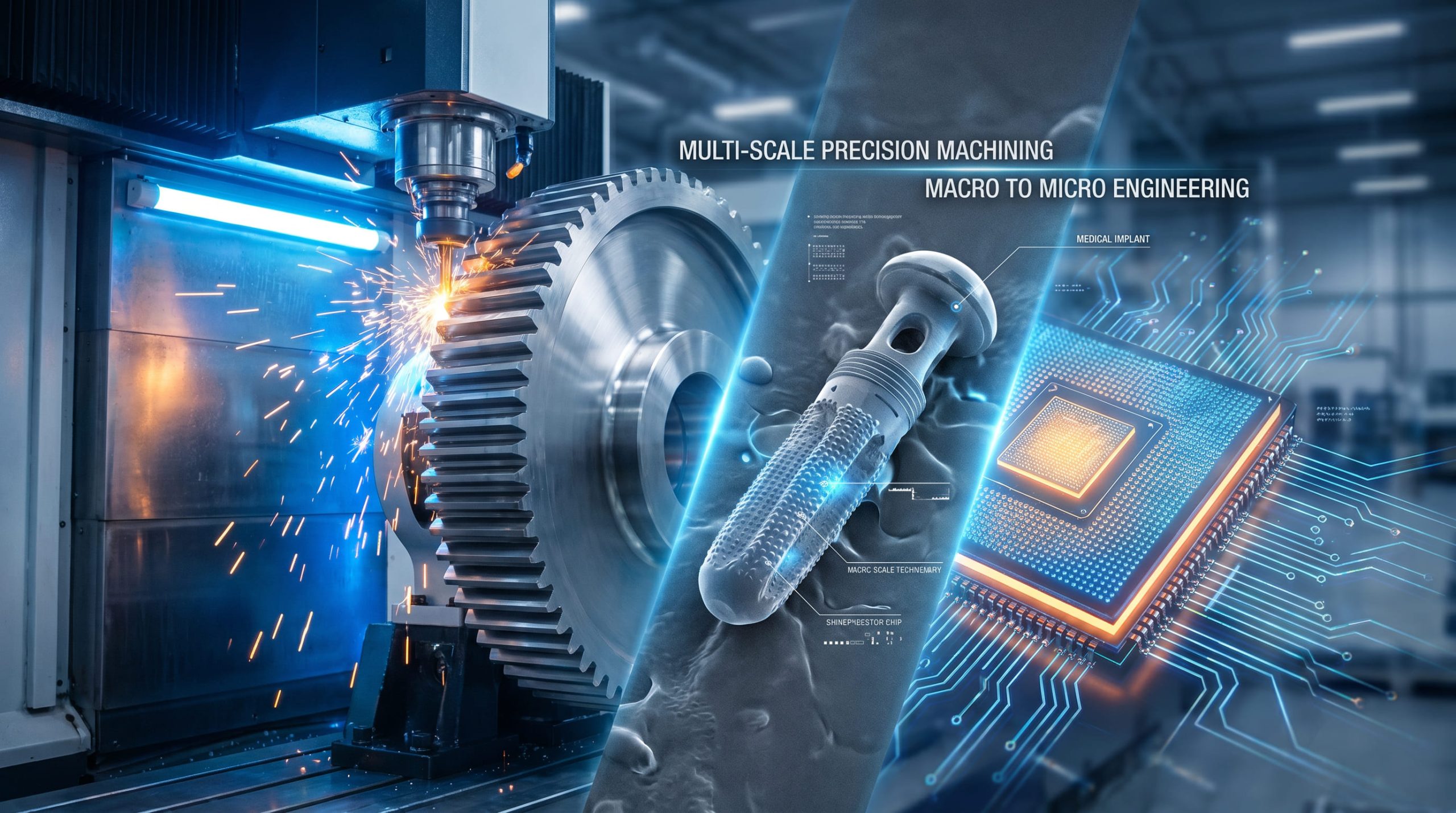
The manufacturing industry stands at a fascinating crossroads where the massive and the minute coexist in increasingly sophisticated harmony. As technology advances, the boundaries between macro-scale industrial machining and micro/nano-scale precision engineering have begun to blur, creating new possibilities for products that require functionality across multiple dimensions. This convergence, known as multi-scale precision machining, represents one of the most significant developments in modern manufacturing, enabling the production of complex components that perform reliably from the visible realm down to atomic-level interactions.
Understanding the Multi-Scale Manufacturing Spectrum
Multi-scale precision machining encompasses the entire spectrum of manufacturing precision, from conventional CNC operations producing features measured in millimeters and centimeters to ultra-precision machining achieving tolerances measured in microns, and finally to nano-scale engineering manipulating structures at the nanometer level. This isn’t simply about making things smaller—it’s about understanding how features at different scales interact, influence each other, and collectively determine a component’s performance characteristics. A modern semiconductor package, for instance, requires macro-scale mounting structures, micro-scale heat dissipation features, and nano-scale surface treatments working in concert to deliver its specified performance.
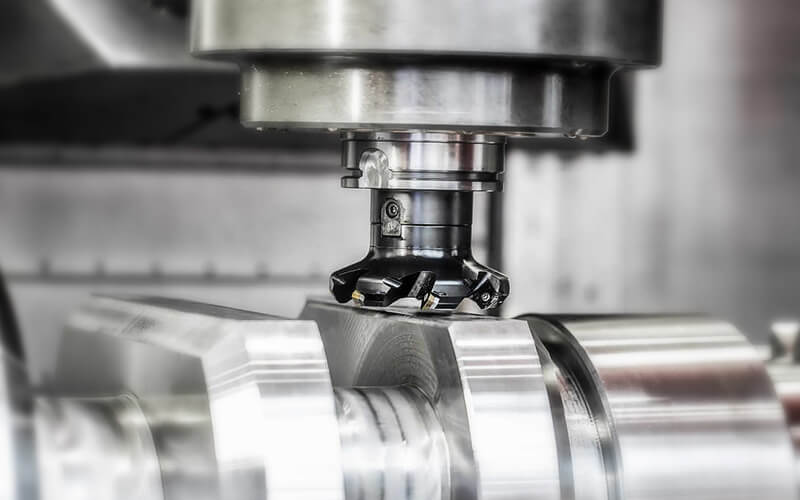
The technical challenges of multi-scale manufacturing stem from the fundamental differences between working at different dimensions. Macro-scale machining concerns itself with bulk material removal, structural integrity, and overall geometry—domains where established technologies like 5-axis CNC machining and multi-spindle operations excel. Micro-scale machining addresses features between 1 and 1000 micrometers, requiring specialized equipment, controlled environments, and expertise in handling materials that behave differently at small dimensions. Nano-scale engineering ventures into realms where surface effects dominate, where atomic bonds matter, and where traditional mechanical cutting often gives way to alternative methods including focused ion beam machining, electron beam lithography, and various forms of additive nanofabrication.
The Industrial Value of Multi-Scale Integration
For manufacturers serving demanding industries—semiconductor equipment, medical devices, aerospace systems, and precision optics—the ability to control features across all scales provides substantial competitive advantages. Products requiring multi-scale precision typically outperform those relying on single-scale approaches because design engineers can optimize each functional zone using appropriate technology. A precision medical implant might feature macro-scale structural geometry for bone integration, micro-scale surface textures promoting cellular adhesion, and nano-scale coatings delivering antimicrobial properties or enhanced biocompatibility—all integrated into a single component through coordinated manufacturing processes.
The economic benefits of multi-scale machining emerge from optimized resource utilization and reduced assembly complexity. When features can be integrated into single-piece components rather than assembled from multiple parts, manufacturing costs decrease, reliability improves, and the final product becomes smaller and lighter. Consider a fiber optic connector: macro-scale machining establishes the outer housing geometry and mounting interface, micro-scale machining creates alignment features and spring mechanisms, while nano-scale texturing optimizes light transmission at the optical interface. Achieving this integration through coordinated multi-scale manufacturing delivers performance impossible to match through any single approach.
Applications Driving Multi-Scale Precision Requirements
The semiconductor industry provides perhaps the most demanding examples of multi-scale manufacturing requirements. Modern integrated circuits contain features measured in nanometers while being packaged in components measured in centimeters—all requiring precise mutual alignment for proper function. Optical systems similarly span scales: telescope mirrors measure meters across while requiring surface precision measured in nanometers. The automotive industry’s shift toward electric vehicles has intensified requirements for multi-scale precision in battery modules, power electronics, and sensor systems where thermal management at the macro scale interacts with electrical interfaces at the micro scale and molecular-level material properties at the nano scale.
Medical device manufacturing increasingly demands multi-scale capabilities as implants and instruments become more sophisticated. Orthopedic implants require macro-scale structural strength, micro-scale porous surfaces for bone ingrowth, and nano-scale surface chemistries promoting specific biological responses. Surgical instruments need macro-scale ergonomics, micro-scale cutting edges and articulation mechanisms, and nano-scale coatings reducing friction and bacterial adhesion. These applications exemplify how multi-scale precision translates directly into clinical outcomes—better patient results, reduced complications, and improved device longevity.
Implementing Multi-Scale Precision in Your Manufacturing Strategy
Successfully incorporating multi-scale precision machining requires careful planning, appropriate equipment selection, and integration expertise. The process typically begins with comprehensive feature analysis, identifying which elements of a design require macro, micro, or nano-scale treatment, and determining how these features interact. This analysis informs equipment selection—some manufacturers invest in multi-scale capability internally while others partner with specialists for specific scale ranges, integrating results through careful process control and metrology.
Quality control at multiple scales demands sophisticated measurement systems, from coordinate measuring machines and optical comparators for macro features through confocal microscopes and white-light interferometers for micro-scale verification, finally reaching scanning electron microscopes and atomic force microscopy for nano-scale inspection. Establishing traceability across scales requires careful calibration and documentation, ensuring that features produced at different times on different equipment integrate correctly in final assembly. Manufacturers committed to multi-scale excellence invest in metrology infrastructure matching their production capabilities.
Partnering for Multi-Scale Manufacturing Excellence
Achieving consistent multi-scale precision requires expertise spanning multiple manufacturing domains and years of accumulated experience. At our facility, we’ve developed integrated capabilities encompassing macro-scale CNC machining, micro-scale precision operations, and partnerships with nano-scale specialists for applications requiring atomic-level control. Our engineering team works closely with customers from initial concept through production, analyzing multi-scale requirements and developing manufacturing strategies optimized for specific applications.
Whether you’re developing power electronics requiring thermal management across scales, medical devices demanding biological interface optimization, or precision instruments where functionality depends on features from macro to nano dimensions, our multi-scale manufacturing capabilities provide the integration expertise necessary for success. Contact our engineering team today to explore how coordinated multi-scale precision machining can address your most demanding manufacturing challenges.
“We can easily manage if we will only take, each day, the burden appointed to it. But the load will be too heavy for us if we carry yesterday’s burden over again today, and then add the burden of the morrow before we are required to bear it factorial non.”
Rebert Kosta