-
By admin
-
8 7 月, 2026
- 0 Comment
Custom Machining Solutions for Robotics and Automation Systems
Meta description: Explore how custom machining solutions power robotics and automation systems. Learn about materials, critical components, manufacturing challenges, and proven engineering solutions for industrial robots, cobots, and AGVs.
The robotics and automation industry runs on precision. Every joint, gear, and housing that makes an industrial robot, a collaborative cobot, or an autonomous mobile robot (AMR) move with sub-millimeter accuracy has one thing in common: it was machined to a standard off-the-shelf parts can’t meet. That is where custom machining solutions come in.
In this guide, you’ll learn what custom machining for robotics really involves, which materials engineers prefer, the components that demand the tightest tolerances, the toughest production challenges, and the solutions the industry’s best machine shops use to solve them.
1. Why Robotics and Automation Demand Custom Machining
Industrial robots repeat the same motion millions of times a year. Automation components must perform flawlessly in harsh factory environments, at high speeds, and often under strict weight constraints. Standard catalog parts simply don’t cut it.
Here’s why custom machining has become foundational to modern robotics:
- Tighter tolerances — Gear mesh, encoder alignment, and bearing seats often need ±0.005 mm accuracy.
- Lighter parts — Every gram saved on a robot arm translates to higher acceleration, lower energy use, and longer battery life in mobile platforms.
- Miniaturization — Surgical robots, micro-drones, and precision actuators are pushing component sizes below 10 mm.
- Application-specific geometry — Each robot design has its own kinematics, load profile, and IP rating, requiring bespoke housings, brackets, and mounts.
- Volume flexibility — Robotics OEMs need everything from a handful of prototypes to tens of thousands of production parts, with the same quality.
2. Key Materials Used in Robotics and Automation Components
Material choice defines performance. The most common options break down into metals and engineering polymers.
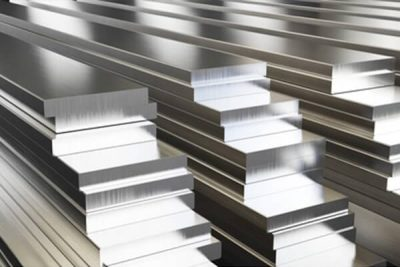
2.1 Aluminum Alloys (6061, 7075, 2024)
- Where they’re used: Robot arm links, joint housings, gearboxes, mounting plates.
- Why engineers love them: Excellent strength-to-weight ratio, easy to anodize, fast cycle times.
- Machining note: Use polished carbide tools, high spindle speeds, and high-pressure coolant to avoid built-up edge.
2.2 Titanium (Grade 5 / Ti-6Al-4V)
- Where it’s used: High-performance robotic joints, aerospace robotics, surgical robots.
- Why engineers love it: Outstanding strength-to-weight ratio, biocompatible, corrosion-resistant.
- Machining note: Low thermal conductivity — use sharp coated tools and lower cutting speeds to prevent work-hardening.
2.3 Stainless Steel (303, 304, 316L, 17-4 PH)
- Where it’s used: End-effectors, grippers, food-grade automation parts, medical robotics.
- Why engineers love it: Corrosion resistance, sterilizable, strong.
- Machining note: 17-4 PH is excellent for high-strength parts after heat treat; 303 is the easiest to machine.
2.4 Engineering Plastics (PEEK, Delrin/POM-C, PTFE, Nylon)
- Where they’re used: Bearing sleeves, cable carriers, low-friction wear pads, insulating components.
- Why engineers love them: Self-lubricating, lightweight, vibration-damping.
- Machining note: Keep tools sharp; plastics are sensitive to heat and can melt or chip.
2.5 Carbon Fiber and Composite Hybrids
- Where they’re used: Lightweight robot arms, drone frames, high-end AGV chassis components.
- Why engineers love them: Ultra-light and stiff, ideal for high-acceleration motion.
- Machining note: Use diamond-coated tools and dust extraction; hybrid metal-composite joints need special fixturing.
2.6 Brass and Copper Alloys
- Where they’re used: Sensor housings, EMI/RFI shielding, electrical contact blocks.
- Why engineers love them: Excellent machinability and electrical conductivity.
- Machining note: Free-machining brass delivers extremely fast cycle times for high-volume parts.
3. Critical Robotics and Automation Components That Need Custom Machining
| Component | Function | Typical Tolerance | Common Process |
|---|---|---|---|
| Harmonic drive / cycloidal gear housings | Enable high-torque, low-backlash motion | ±0.01 mm bore, Ra 0.4 µm | 5-axis CNC milling, precision boring |
| Robotic joint modules | Connect actuators and transfer motion | ±0.02 mm concentricity | Multi-axis turning + milling |
| End-effector / gripper jaws | Grip and manipulate parts | ±0.025 mm profile | Swiss turning, micro-milling, EDM |
| Encoder mounting plates | Hold encoders aligned to motors | ±0.005 mm positional | Jig grinding, precision milling |
| AGV/AMR wheel hubs and bearing blocks | Support vehicle payload and motion | ±0.02 mm, balanced | CNC turning, grinding |
| Sensor brackets and mounts | Hold cameras, LiDAR, IMUs | ±0.05 mm | 3-axis and 4-axis milling |
| Cable management carriers | Protect and guide robot cables | Tight bend radii, low friction | CNC milling of polymers |
| Robot base plates and frames | Anchor the entire robot structure | Flatness ±0.05 mm/m² | Large-format 5-axis milling |
| Linear actuator housings | House ball screws or rollers | ±0.01 mm bore | CNC turning, honing |
4. Top Manufacturing Challenges in Robotics Machining
Even world-class machine shops hit friction when scaling robotics parts.
4.1 Ultra-Tight Tolerances on Small Features
Encoder rings, gear teeth, and bearing seats often live in the ±5–10 µm range. Thermal growth, tool wear, and vibration all become critical.
4.2 Weight Reduction Without Sacrificing Strength
Many robot designers want thinner walls, lattice structures, and topology-optimized geometry — all of which are far harder to machine than solid blocks.
4.3 Complex, Multi-Axis Geometry
Robotic joints and gear housings typically have curved internal features, deep pockets, and undercuts that demand 5-axis simultaneous machining.
4.4 Repeatability at Scale
A robot that works perfectly with parts from prototype lot #3 must work identically with parts from lot #30,000. Process control is everything.
4.5 Mixed Volumes, Mixed Materials
A robotics OEM might order 5 units of a titanium surgical tool and 50,000 units of an aluminum sensor mount in the same quarter. The machining partner must flex.
4.6 Surface Finish for Functional Surfaces
Sealing surfaces, bearing seats, and optical mounts need Ra values as low as 0.1 µm — often achieved through grinding, lapping, or post-machining polishing.
4.7 Cleanliness and Deburring
Automation parts often integrate into sealed assemblies. Any stray chip, burr, or coolant residue can cause field failures.
5. Proven Engineering Solutions
Leading custom machining partners overcome these challenges with a combination of equipment, process, and people.
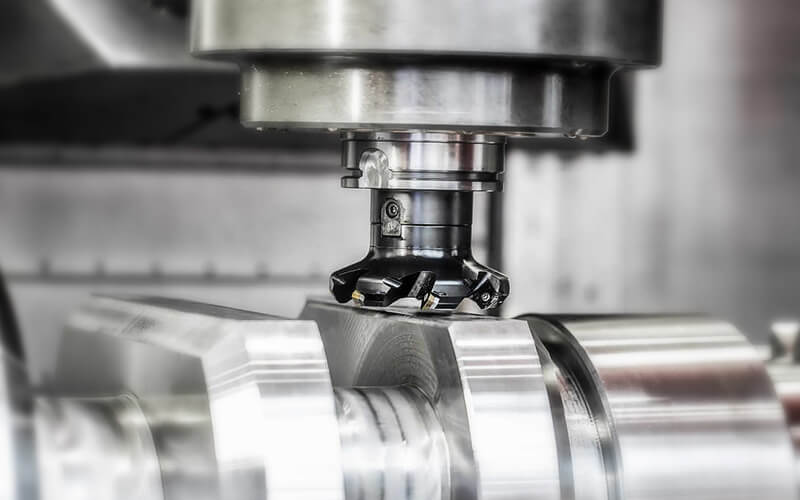
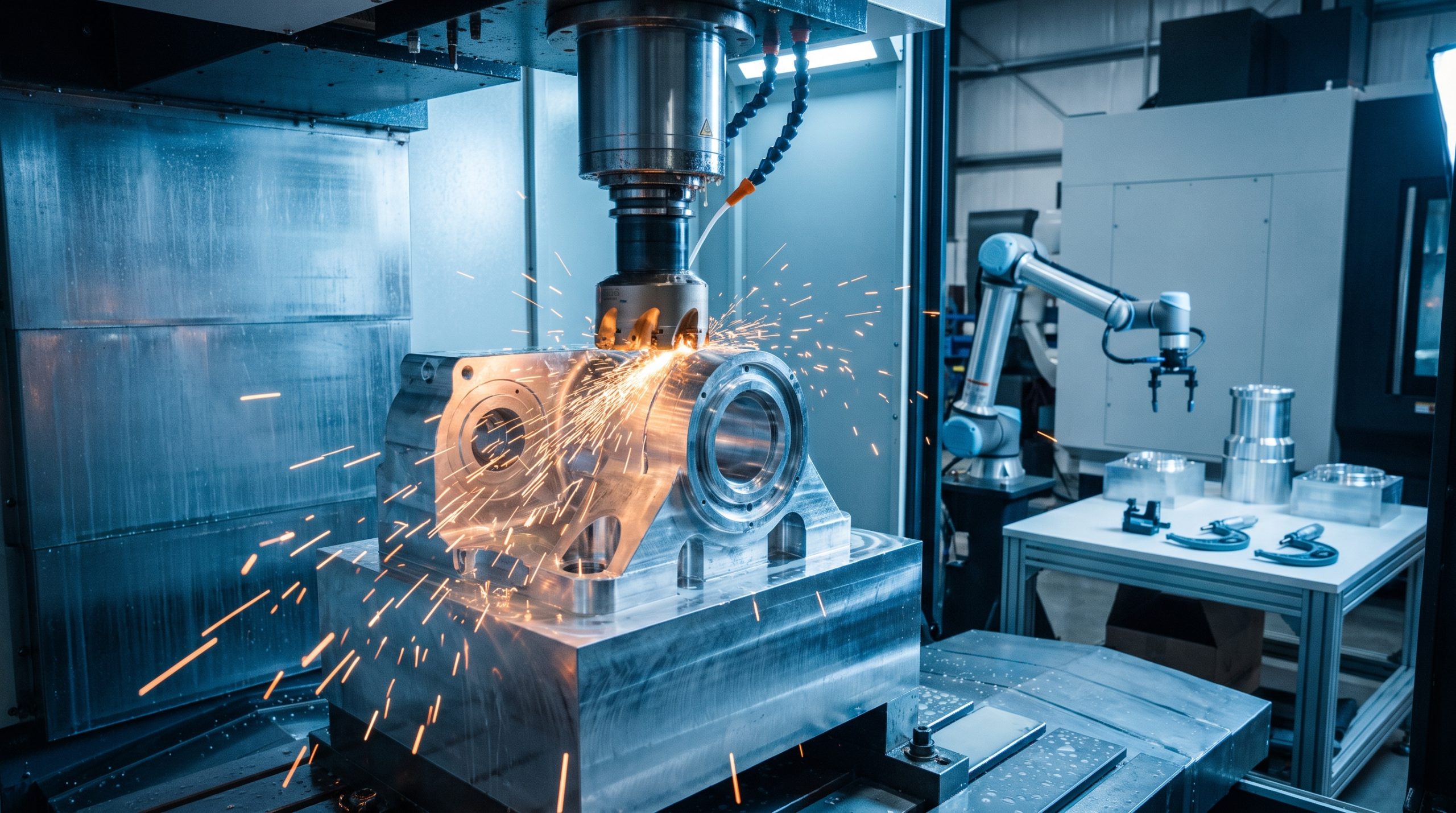
5.1 5-Axis Simultaneous Machining
Reduces setups, improves accuracy, and unlocks complex geometries in a single operation. Critical for joint housings and harmonic drive components.
5.2 Swiss-Type Turning and Micro-Machining
For small, high-precision cylindrical parts like encoder shafts and pinion gears, Swiss lathes deliver accuracy that conventional turning can’t match.
5.3 Advanced Tooling and Custom Form Tools
Custom-form cutters machine a complete feature in a single pass — perfect for gripper jaws, encoder slots, and gear teeth. Diamond-coated tools extend life in abrasive composites.
5.4 In-Process Metrology and Closed-Loop Control
On-machine probing, laser scanning, and real-time tool compensation catch drift during the cut, not after it. This is the difference between scrap and yield at scale.
5.5 Automation and Lights-Out Production
Robotic loading, pallet changers, and automated deburring let high-volume parts run 24/7 with consistent quality.
5.6 Cryogenic and High-Pressure Coolant
Especially for titanium and stainless, high-pressure coolant evacuates chips, reduces heat, and extends tool life.
5.7 Post-Machining Services Under One Roof
Anodizing, hard-coat anodizing, electroless nickel, passivation, powder coating, polishing, and laser marking — done in-house — eliminate logistics risk and protect tolerance.
5.8 Digital Twin and Process Simulation
Simulating the cutting process before running a single part allows engineers to optimize feeds, speeds, and tool paths, dramatically reducing ramp-up time.
6. Quality Control Standards for Robotics Components
Custom machining partners serving the robotics industry typically work to:
- ISO 9001:2015 — Baseline quality management
- AS9100D — Required for aerospace robotics
- IATF 16949 — Common in automotive automation
- ISO 13485 — Required for surgical and medical robotics
- ISO 14644 — Cleanroom assembly for sensitive applications
- RoHS / REACH — Material compliance for global markets
In-house inspection typically includes CMM measurement, surface profilometry, optical comparators, hardness testing, and full PPAP / FAI documentation.
7. Applications Across the Robotics Industry
Custom machining solutions show up across every robotics segment:
- Industrial articulated robots — Automotive, metalworking, plastics, food & beverage.
- Collaborative robots (cobots) — Precision-machined joint modules and torque sensor housings.
- Autonomous mobile robots (AMRs) and AGVs — Wheel hubs, drive housings, sensor mounts, battery enclosures.
- Surgical and medical robots — Biocompatible titanium instruments, sterile stainless grippers.
- Drones and UAVs — Lightweight carbon fiber arms, aluminum motor mounts.
- Humanoid robots — Compact, high-torque actuators, lightweight links.
- Semiconductor and electronics automation — Cleanroom-compatible, low-outgassing parts.
- Defense and aerospace robotics — AS9100-grade components, exotic alloys.
8. Future Trends in Custom Machining for Robotics
Expect the next 3–5 years to bring:
9. How to Choose a Custom Machining Partner for Robotics
When evaluating machine shops, look for:
- ✅ Documented robotics experience — case studies and customer references
- ✅ Material breadth — aluminum, titanium, stainless, plastics, composites
- ✅ Tolerance capability down to ±0.005 mm with CMM verification
- ✅ 5-axis and Swiss turning capacity for complex parts
- ✅ In-house finishing and inspection — anodizing, CMM, surface metrology
- ✅ Scalable production — from prototype to tens of thousands
- ✅ Engineering support for DFM (design for manufacturability) early in the design cycle
- ✅ Quality certifications relevant to your industry
Conclusion
The robotics and automation industry doesn’t accept “good enough” — and neither should your machining partner. From harmonic drive housings to sensor mounts, from prototype runs to high-volume production, custom machining solutions turn ambitious robotic designs into reliable, repeatable products.
Building the next generation of robots? Partner with a machining team that understands the precision, materials, and process control your design demands.
FAQ
What tolerances are typical for custom robotics components? Most precision robot parts fall in the ±0.01–0.05 mm range. Critical features like encoder mounts and bearing seats may need ±0.005 mm or tighter.
What is the most common material for industrial robot parts? Aluminum 6061 and 7075 are the workhorses, used for arm links, housings, and mounting plates. Titanium and stainless are used where strength, weight, or corrosion resistance demand it.
Why do robotics OEMs prefer custom machining over standard parts? Standard parts can’t deliver the tight tolerances, weight targets, and application-specific geometry that robotic designs require.
Can a machining partner handle both prototype and production volumes? Yes, the best partners offer flexible capacity — from one-off prototypes to high-volume production — under the same quality system.
How long does a typical robotics machining project take? Prototypes can ship in 1–3 weeks. Production lead times depend on volume, material, and complexity — typically 4–8 weeks for first articles, then Kanban or just-in-time delivery.
Is additive manufacturing replacing CNC for robotics parts? Not yet. Additive is excellent for topology-optimized prototypes and lightweight structures, but CNC still wins for tight-tolerance production parts, especially in titanium and stainless.
“We can easily manage if we will only take, each day, the burden appointed to it. But the load will be too heavy for us if we carry yesterday’s burden over again today, and then add the burden of the morrow before we are required to bear it factorial non.”
Rebert Kosta